
Alternative links: Internet Archive | PeerTube
Do No Harm: Who Decides What Technology Peace Needs?
At The PeaceTech We Want Online Summit (19 October 2026), peacebuilders, technologists, researchers and policymakers explored how to bring the open movement closer to those working on peacebuilding and conflict mediation.
This panel, moderated by Nathan Coyle, centred on “do no harm,” agency, and putting peacebuilders at the start of design conversations. Coyle argued that agency means including peacebuilders—many of whom are not digitally connected—in designing tools, and asked whether using tools built without them can itself be a form of agency. He proposed a hypothetical “peacebuilder-centred design” layer on top of human-centred design, noted that not all peacebuilders use that label, and suggested “vibe coding” could give peace-oriented people more power over tech.
Benjamin Cerigo argued that human-centred design should focus on the problems and needs of local peacebuilders and communities rather than glossy tools. He cited Build Up’s Digital Steps project in Syria, which gave eight small local organisations agency and workshops to develop digital peace initiatives, and a human-centred design course incorporating nonviolent communication to assess needs. He warned that engineers carry solutionism and ego, that AI expands agency but can also constrain, and that AI’s ideology may not always be best for peace.
Lena Slachmuijlder defined agency as the belief that you can make a difference, the skills and ability to do so, and being perceived that way, noting that Search for Common Ground’s Peace Impact Framework measures agency first because without it almost no change is possible in conflict. She said AI can strengthen agency but argued that governance and ownership are lacking because private frontier models leave peacebuilders and citizens exposed without controlling the steering wheel. She called for a citizens track and pre-release standards, said the core challenge is building trust, collaboration, and win-win outcomes and must involve decision-makers and governments, not only civil society, and cited Taiwan’s deliberative tech as an example of input, deliberation, action, and growing trust.
Naomi Kilungu situated peace in African contexts within economics, development, resource management, and community development across prevention through reconstruction and sustainability, noting Africa accounts for over 60% of conflicts. She criticised importing tools to fit communities instead of defining problems with victims and local communities. She cited AI for Peace Africa’s work ahead of Kenya’s 2027 elections, predicted to carry high conflict risk, building a peace-tech tool to decode local languages where political violence occurs—not a blanket implementation. On Do No Harm, she said governance is slow but alignment with African Union Vision 2063 helps; risks depend on who sits at the table because AI governance is not neutral and selected stakeholders bring biases, so better governance is needed for Africa.
Speakers
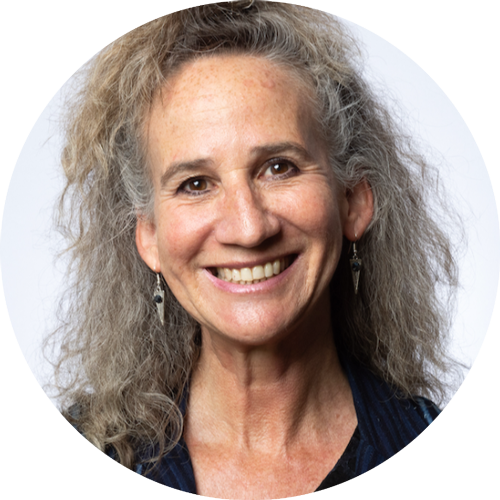
Lena Slachmuijlder – Senior Advisor of Digital Peacebuilding at Search for Common Ground and Co-Chair of the Council on Tech and Social Cohesion
Lena Slachmuijlder works at the intersection of technology, peacebuilding and governance. As Co-Chair of the Council on Tech and Social Cohesion and Senior Advisor on Digital Peacebuilding at Search for Common Ground, she bridges global policy with grounded practice, shaping pro-social tech design across policy, product, and practice. A graduate of Stanford University, she has 30 years of experience in media and peacebuilding, across Africa, Asia and the Middle East. She lives in Brussels.

Naomi Kilungu – Founder & Executive Director at AI for Peace Africa
Naomi Kilungu is a scholar and researcher in peace and conflict. Her work centres on the decolonisation and localisation of technology, AI governance for peace, and AI governance in African conflict and reconstruction contexts. She also works on Africa’s security architecture, on UNSCR 1325 and 2250, and on conflict economics and peace finance. She is the founder of Safer Communities Alliance and an advocate for Art for Peace. She is a 2026 ECAF Fellow, a 2025 awardee of the UN 10×10 Youth, Peace and Security Impact Stories initiative, and a Warrior for Good in Kenya (2025). She has contributed her work to forums and platforms across the globe.

Nathan Coyle – Senior PeaceTech Advisor at Austrian Institute for Technology
Nathan Coyle is a PeaceTech researcher and practitioner based in Austria, where he works as an Expert Advisor for PeaceTech at the Austrian Institute of Technology and is a founder of the PeaceTech Alliance. His work focuses on the intersection of technology, peacebuilding, data, community development and responsible innovation. Nathan has advised governments and international organisations across Europe, Africa, the Americas and the Middle East, and has contributed to work with the United Nations, OSCE and European Union. He is the author of Open Data for Everybody, a TEDx speaker, and was named Thought Leader of the Year at the 2024 UK Innovation Awards. He regularly lectures and speaks on PeaceTech, digital transformation, data governance and technology for social impact.

Benjamin Cerigo – Peace Tech Architect at Build Up
➕ Find a summary of more panels and keynotes
💬 Join the conversation in the Open Knowledge Forum

