
Alternative links: Internet Archive | PeerTube
AI at the Negotiating Table: What Does a Peace Negotiator Need to Know?
At The PeaceTech We Want Online Summit (19 October 2026), peacebuilders, technologists, researchers and policymakers explored how to bring the open movement closer to those working on peacebuilding and conflict mediation.
At this roundtable, Miriam Coronel-Ferrer and Miloš Strugar both agreed that negotiation is profoundly human-centric and that AI cannot replace trust, which requires face-to-face interaction, personal connection, and friendship built through serious and light moments alike. Drawing on extensive mediation experience, Miloš argued that AI cannot read emotions, non-verbal and vocal cues, or apply moral and ethical reasoning; intuition is a core negotiator skill, and AI is more mathematics, patterns, and algorithms.
Renata Ávila raised the geopolitical dimension: ownership of major AI companies is concentrated in two countries with strong incentives to know what the rest of the world is doing, which should make negotiators wary – yet diplomatic missions in countries like Guatemala are under-resourced and overworked, scrambling to match better-resourced counterparts. Asked where she wished she had AI, Miriam said it could have been useful for research and drafting—finding prior peace agreements, checking legality, constitutionalising language, and providing leads to agreements she had not heard of—but not for deciding.
Miloš called culture the biggest challenge for AI: culture shapes worldviews, moral views, communication styles, meaning-making, framing, identity, and values, with low-context versus high-context cultures and individualist versus communitarian identities. Even universal values like tolerance or “good values” are interpreted differently.
Renata noted that mainstream AI systems ignore cultural differences and are trained on homogeneous data reflecting dominant groups in rich countries, and warned of a false sense of being better equipped. Asked whether AI could draft a mutually acceptable agreement, Miriam doubted parties would ever accept what AI gives them, though bits and pieces could be offered; Miloš said it might work in arbitration if parties agree in advance to accept the ruling, but not in political and peace negotiations.
Renata closed by hoping for offline, secure, human-led tools that small teams can control, and noted that the Open Knowledge Foundation and Conflux Center will release learning resources next month.
Speakers
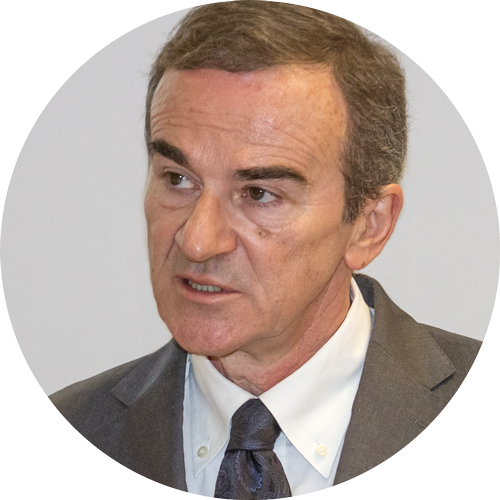
Miloš Strugar – Executive Director of Conflux Center for Intercultural Dialogue and Mediation, UN Senior Mediation Adviser
Mr. Strugar has spent over twenty years as a high-ranking civilian officer with the United Nations in various peacekeeping and political missions in Africa, Asia, and the Middle East. He was directly engaged in comprehensive peace and reconciliation talks in South Africa and Tajikistan. He has considerable experience with ceasefire and cessation of hostilities issues, including facilitating discreet dialogue with non-state armed groups. Mr. Strugar played a critical role in mediating cessation of hostilities between the Israeli Army and Hezballah in Southern Lebanon on many occasions, assisted UN Special Envoys on the ceasefire agreement in Syria, and led the UN expert delegation at the Astana talks on the conflict in Syria. He also has extensive experience in public communications in crisis contexts.
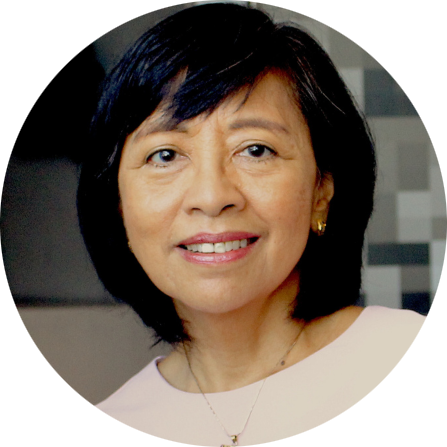
Miriam Coronel-Ferrer – Peace Negotiator, Co-Founder of Southeast Asian Women Peace Mediators
Miriam Coronel-Ferrer is a Filipino peace negotiator who was the chair of the peace panel of the government of the Philippines during the time of President Benigno S. Aquino III (2010–2016). On behalf of the government, Coronel-Ferrer signed the Comprehensive Agreement on the Bangsamoro with the Moro Islamic Liberation Front. She is the first female chief negotiator in the world to sign a final peace accord with a rebel group. She is also a political science professor at the University of the Philippines (UP).

Renata Ávila – CEO, Open Knowledge Foundation
Renata Ávila is an international human rights and technology lawyer and openness advocate. She is helping individuals and organisations access and use data to take action on the most pressing social problems, as well as preserving and enhancing human rights through open standards, policy and advocacy. In her previous practice, focused in strategic litigation for access to information and access to justice, she represented high profile human rights advocates, including Nobel Peace Prize Rigoberta Menchu Tum. A former fellow and affiliate of the Stanford Institute of Human-Centred Artificial Intelligence, she is currently associated with the Center for Internet and Society at CNRS, France. She serves on the boards of several organisations, including Open Future, the Center for the Advancement of Infrastructural Imagination and the Just Net Coalition. She co-founded the Alliance for Inclusive Algorithms and the Progressive International. She has co-authored two books and contributed chapters to several others, and regularly contributes to different publications in English and Spanish.
➕ Find a summary of more panels and keynotes
💬 Join the conversation in the Open Knowledge Forum

